
Where Wonder Grows:
A Morning at Gingerly Green Flower Farm
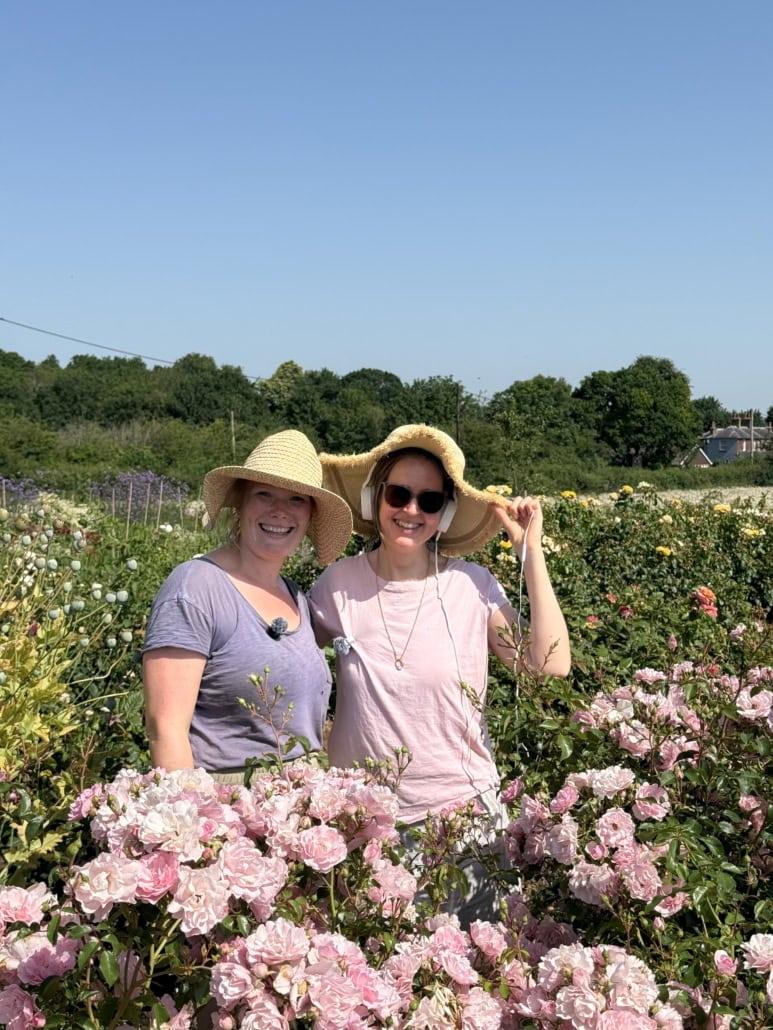
The day is only just beginning when I arrive at Gingerly Green Flower Farm, but the birds are already in full voice.
Their song is often louder than the traffic from the nearby road. Bees move between the rows, weaving through thousands of flowers catching the first light. There are burnt oranges, lilacs, purples and soft yellows. Snapdragons rise in tall spikes, scented phlox fills the air and hundreds of dahlias wait quietly in their beds, not yet flowering but already holding the promise of what is to come.
Clare Redman, the owner of the farm, knows this land intimately. She notices what is blooming, what is fading and what is preparing itself beneath the surface. As we walk through the farm together, I begin to understand that this is not simply a place where flowers are grown.
It is a place where wonder is practised.
Welcome to Where We Come Alive.
A Landscape Coming Back to Life
Three years ago, this land was a wheat field. A monoculture.
Now, it is alive with birds, insects, flowers and herbs. Clare tells me that the change in biodiversity has been extraordinary. She works here every day, and she has watched the landscape become louder, busier and more varied around her.
She grows fennel not only because it flowers beautifully and lasts well in a vase, but because pollinators love it. She knows she will never cut every bloom, so there will always be something left for the bees and insects to feed from.
Standing beneath the tall fennel, surrounded by its rich summer scent, it feels as though the farm has become its own small ecosystem. Clare has not simply planted flowers here. She has created the conditions for other forms of life to return.
There is something quietly moving about that.
We often think of creativity as the act of making something new, but perhaps it can also be the act of making space. A field changes because someone allows it to become more than one thing. The birds return. The insects arrive. The soil begins to hold a different story.
Learning to Live With the Seasons
When I ask Clare what makes her feel alive about growing flowers, she talks about change.
Nothing lasts forever here.
Tulips arrive and disappear. Other flowers take their place. Dahlias wait until later in the summer and continue until the first frost. Each part of the year brings its own work, beauty and anticipation.
Clare says she would find it boring if tulips flowered all year. Their passing creates the excitement of wondering what is coming next.
Working this closely with the seasons has changed the rhythm of her life. Summers are intense and busy. Winter brings later mornings and a chance to slow down. She does not try to pretend the work is always idyllic. Farmers are never entirely happy with the weather, she laughs, but the task is to work with it rather than against it.
We are walking through the farm during a heatwave, and Clare shows me the dark layer of mulch covering the soil. Beneath it, the earth is still moist. She prepared it before the worst of the heat arrived, allowing the mulch to hold the water and protect the plants.
There is no fighting the temperature. There is preparation, adaptation and an understanding of what the land needs.
Perhaps that is part of what seasonal living really asks of us: not passivity, but attention. Knowing when to push forward, when to prepare and when to retreat into the shade.
The Beauty of What Is Becoming
Clare’s favourite season is spring, but not necessarily when the farm is in full bloom.
She loves the weeks when the field is green and full but has not yet burst into colour. To another person, it might look unfinished. To Clare, it is full of potential.
“It’s showing what’s coming,” she says.
I love that.
We are so often encouraged to value the final version of things. The finished work. The visible result. The moment when something has fully arrived and can be admired by others.
But Clare sees beauty earlier than that. She sees it in green shoots, unopened buds and fields that are not ready yet.
Later, she shows me foxgloves at every stage of their cycle. Some are in flower, some have gone to seed and others are sending up a second bloom. Even the ones that appear to be dying are still beautiful to her. Their seeds are as fine as dust. She cuts the dried stems and shakes them across the land like a magic wand, trusting that more flowers will emerge.
Nothing here is only beginning or ending. Everything is becoming something else.
Remembering How to Notice
People come to the farm to pick their own flowers, and Clare has noticed how they change during their visit.
Some arrive distracted or slightly closed off, still carrying the pace of their day. They return two hours later softer, brighter and surprised by how long they have spent among the flowers.
The task itself is simple. Choose this stem or that one. Decide which colours belong together. Cut a flower and place it in the bucket.
For a while, there is no space for worrying about everything else. Their attention is held by what is directly in front of them.
It is presence without pressure.
There is also play. Adults walk into the field with secateurs and realise they are allowed to cut the flowers. They become like children in a sweet shop, amazed by the abundance and unsure where to begin.
As we talk, a red kite appears above us, circling on the warm air. Clare stops immediately to watch it. She notices the shape of its wings, the way it moves and how different it looks from a buzzard.
The farm teaches people to see again.
Not because anyone tells them to be more mindful, but because the world becomes too interesting to ignore.
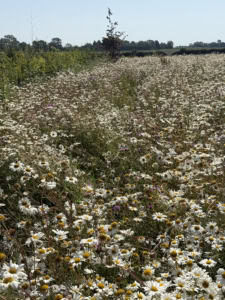
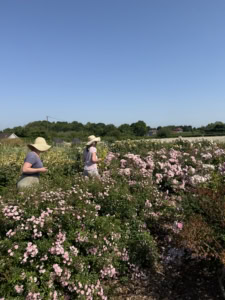

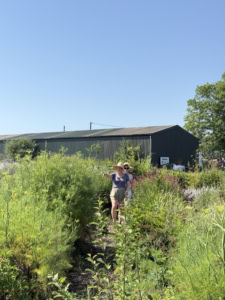
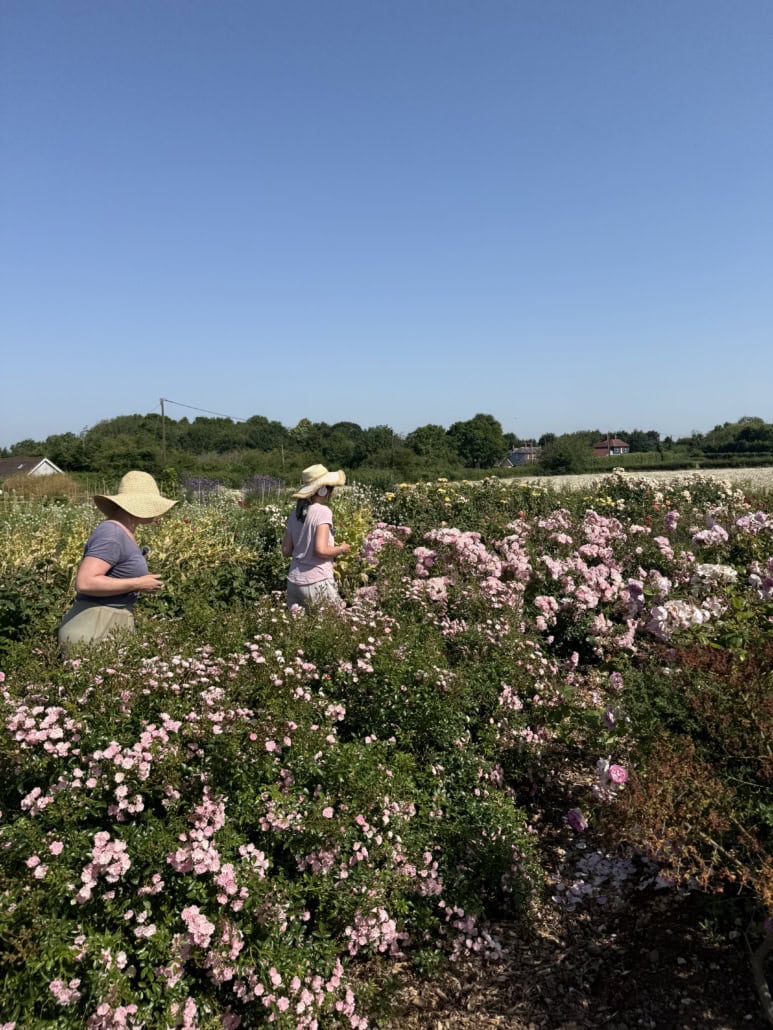
Images from the farm: A gloriously hot morning walking through rows and rows of beautiful blooms.
What Flowers Remember
Scent holds memory in a way that words often cannot.
People smell flowers on the farm and begin talking about their grandmothers, their wedding bouquets or gardens they knew long ago. One fragrance opens a door to another time.
Clare hands me the feathery leaves of a herb and asks me to rub them between my fingers. The smell is familiar, but I cannot place it. When she tells me it is called a cola plant, recognition arrives immediately: old-fashioned bottles of Coca-Cola, sweet shops, ice-cream floats and childhood summers.
That is part of the wonder here. The flowers and herbs are not simply beautiful objects. They carry stories. They return people to moments they did not realise they still remembered.
We finish in the wildflower meadow, where oxeye daisies, yarrow, knapweed and grasses stretch towards the horizon. Butterflies move through the soft white, yellow and purple haze. Clare shakes a dried stem of yellow rattle, and its seeds make the tiny sound that gave the flower its name.
When I ask what flowers understand about life that people sometimes forget, Clare answers without hesitation.
“Perseverance.”
She has nurtured plants that seemed determined not to survive, only to find them thriving later. She has seen flowers appear through cracks in pavements and concrete, growing where they had no obvious right to be.
They try again.
Walking through the fields with Clare, I am reminded that beauty does not arrive overnight. It is planted, protected, nurtured and trusted. Sometimes it is visible. Sometimes it is still gathering itself beneath the soil.
Perhaps wonder is the same.
It grows when we slow down long enough to notice what is already alive around us.
If you enjoyed this conversation, you can listen to the full episode of Where We Come Alive with Clare Redman from Gingerly Green Flower Farm. 🌸🌿🎙️
Listen to the episode
If you enjoyed this conversation, you’ll find more episodes of Where We Come Alive waiting for you on Spotify, Apple, Amazon or wherever you get your podcasts. Each week, I spend time outdoors with inspiring women in places they love, exploring how nature, creativity and landscape shape the way we live, see and feel.
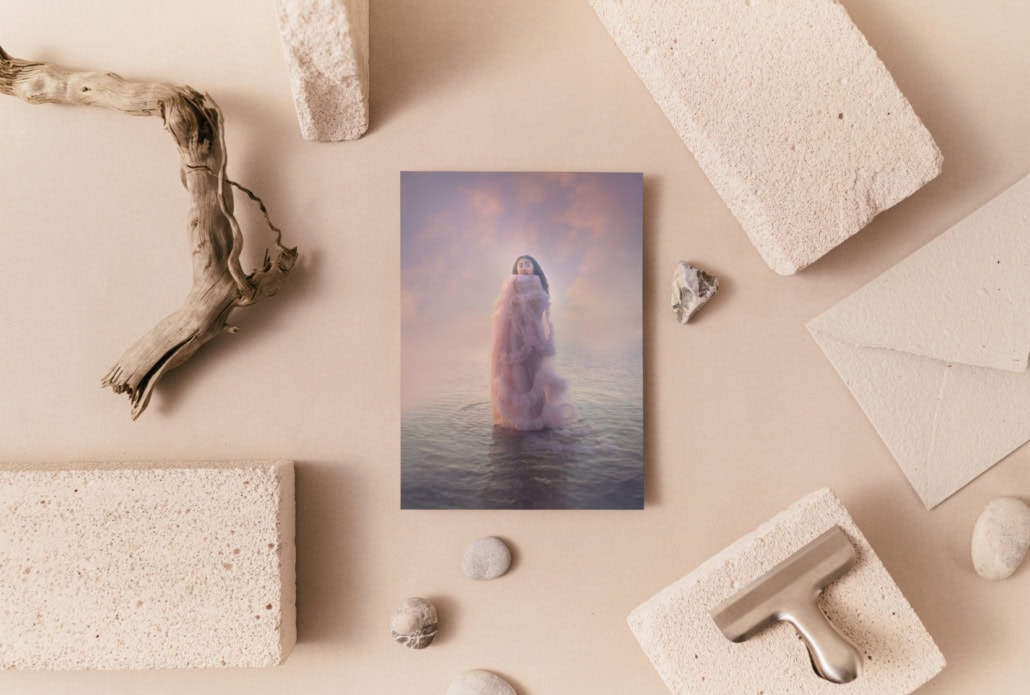
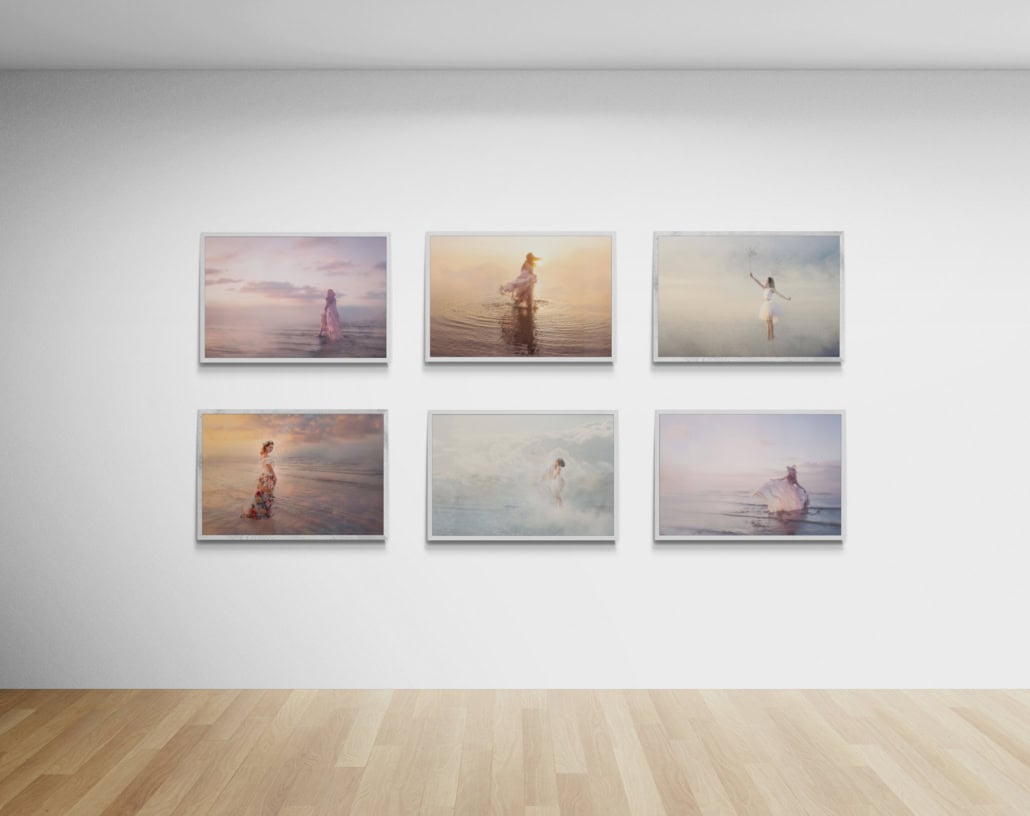
Louisa Peacock creates fine art photographic prints that celebrate the beauty, stillness and wonder of the natural world. Inspired by the changing seasons, wild landscapes and the quiet moments often overlooked, her work is an invitation to slow down, notice more deeply and reconnect with the places that make us feel most alive.
Each piece is thoughtfully produced as timeless artwork for homes that value beauty, nature and meaningful living.
The Where We Come Alive podcast is on all major platforms including Apple, Amazon and Spotify. Please follow me wherever you get your podcasts to ensure you don’t miss an episode.

