
The difference between fine art photography and standard photography
People often ask me what makes fine art photography different from standard photography. The simplest answer is this: standard photography usually captures what something looked like. Fine art photography explores what something felt like. As a fine art photographer, I use light, movement, colour, styling and atmosphere to create images that feel more like artwork than a straightforward record of a moment. My work is rooted in emotion, presence and the idea of returning to yourself, often using the Whitstable coastline, wide skies and natural light as part of the story. Louisa describes her work as ethereal, dreamy portraiture, shaped by nature, the sea, Turner skies, authenticity and homecoming.
-
Standard photography records. Fine art photography interprets.
Standard photography is often about accuracy. It shows the people, the place, the outfit, the event or the moment clearly.
Fine art photography goes a step further. It still uses the camera, of course, because I have not yet managed to make images through interpretive dance. But the aim is different. I am not only asking, “What does this look like?” I am asking, “What is this image trying to say?”
A standard portrait might show a woman standing by the sea.
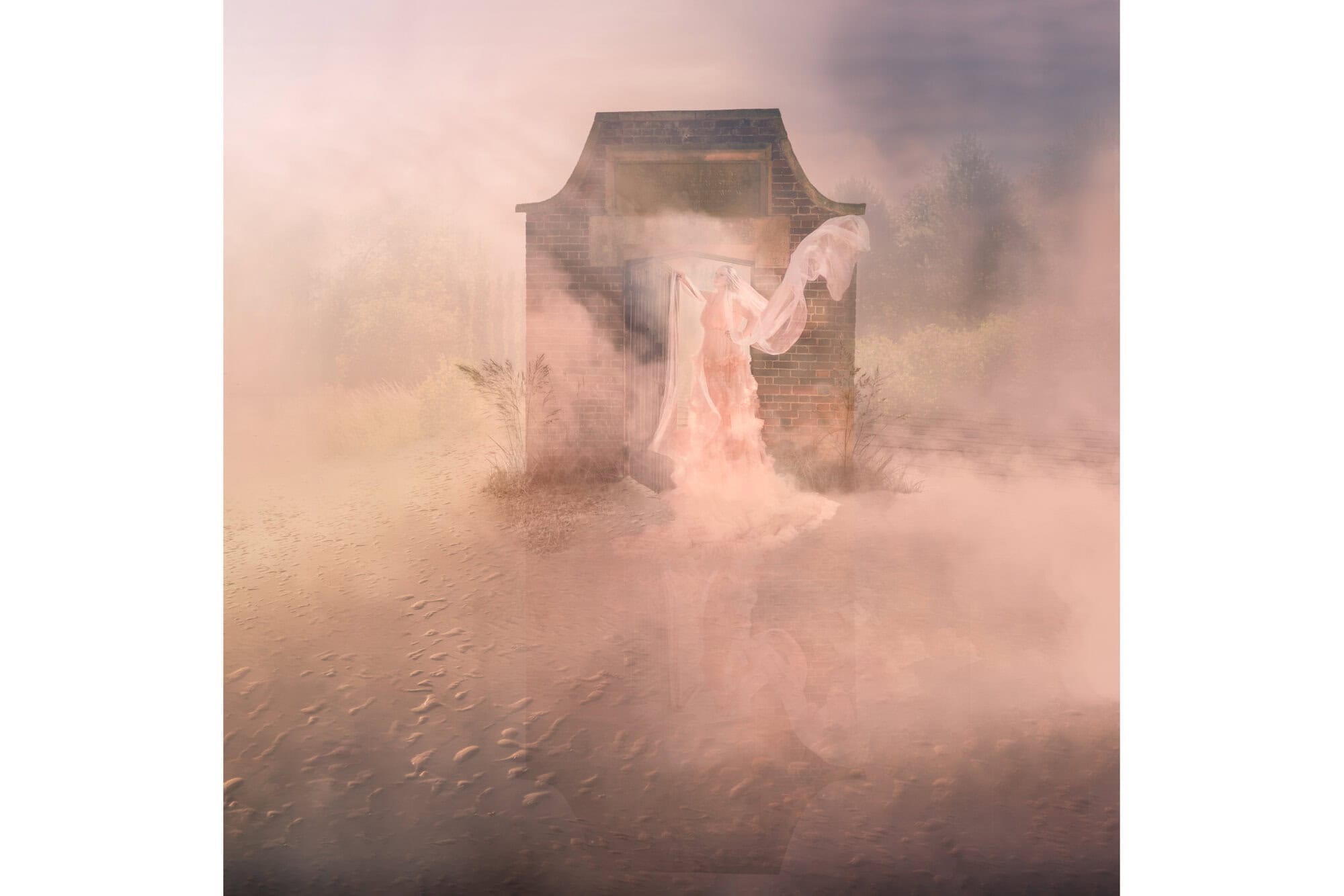
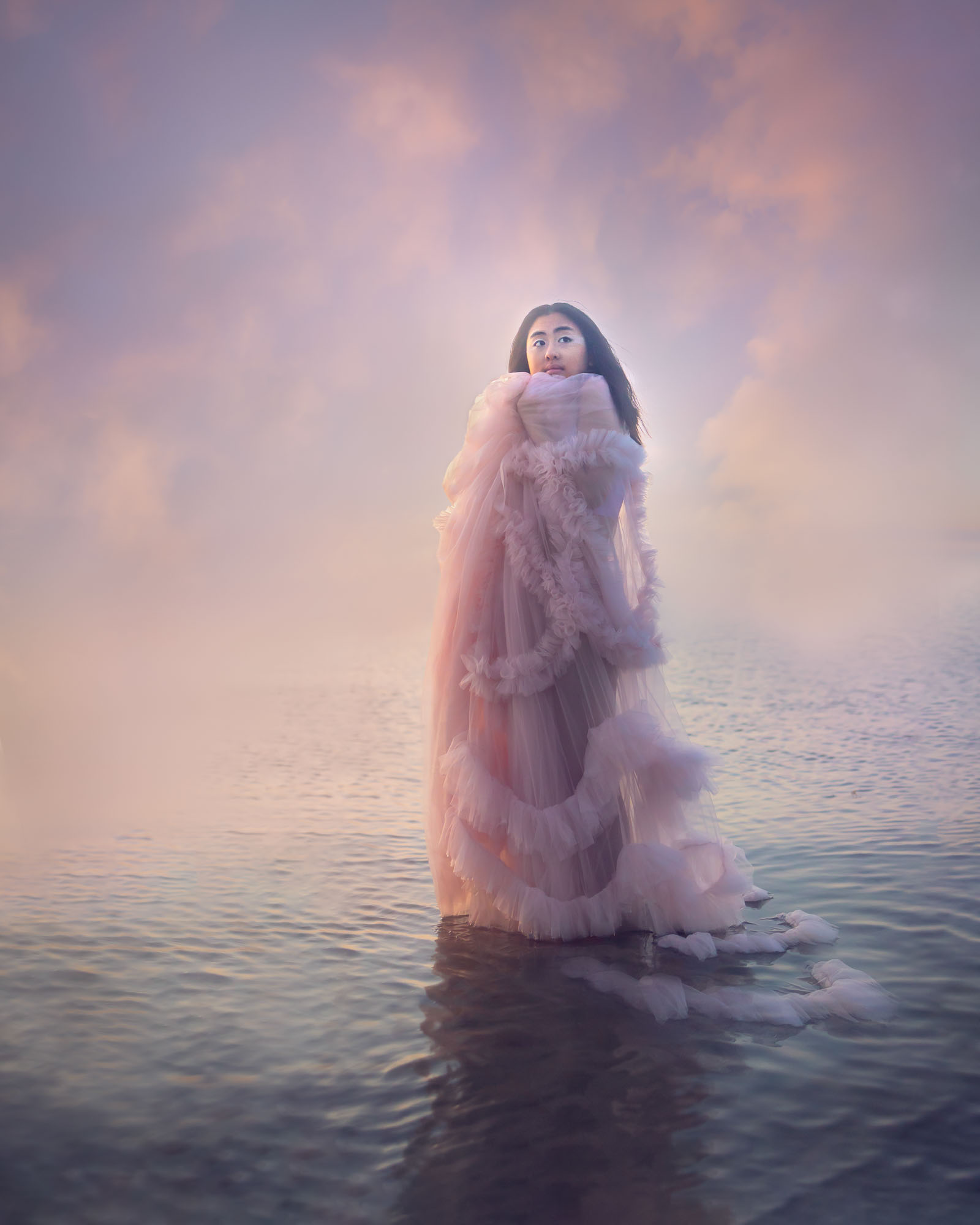
A fine art portrait might show her emerging from the water at sunrise, wrapped in fabric, surrounded by misty light, looking as though she is stepping into a new version of herself.
Both are photographs.
Only one is designed to feel like a piece of art.
2. The intention is different
With standard photography, the goal is often practical. You may need a clear family portrait, a business headshot, a product image or event coverage.
With fine art photography, the image starts with an idea, a feeling or a theme. In my own work, I explore presence, renewal, authenticity and the courage to stop performing for others. My photography became a way for me to process loss, illness and change, and to create something that felt honest rather than polished for the sake of it.
A standard image might say:
“This happened.”
A fine art image might say:
“This is what it felt like to become yourself again.”
That is the real difference.
Fine art photography is led by meaning.
3. The visual style is more considered
Fine art photography is usually more stylised than standard photography. Every part of the image matters.
That can include:
Light, Colour, Clothing, Movement, Texture, Location, Expression, Composition and Editing
In my work, I am drawn to softness, blur, mist, fabric, natural light and the space between dream and reality. I often photograph women at sunrise or sunset, using the sea and sky as part of the emotional language of the image.
A standard photograph might use clean, even light so everything is clear.
A fine art photograph might use golden light, shadow, wind, water or movement to create a mood.
One aims for clarity.
The other aims for atmosphere.
4. Fine art photography often feels more timeless
Standard photography can be tied to a specific trend, pose or moment. That is not a bad thing. Some images need to capture exactly who was there, what happened and what everyone was wearing.
Fine art photography is usually created to last beyond the moment.
It may feel painterly, dreamlike or cinematic. It may have a softness that makes it feel less like a snapshot and more like a memory. On my website, I describe artistic fine art photography as less about recording what something looked like and more about expressing how it felt.
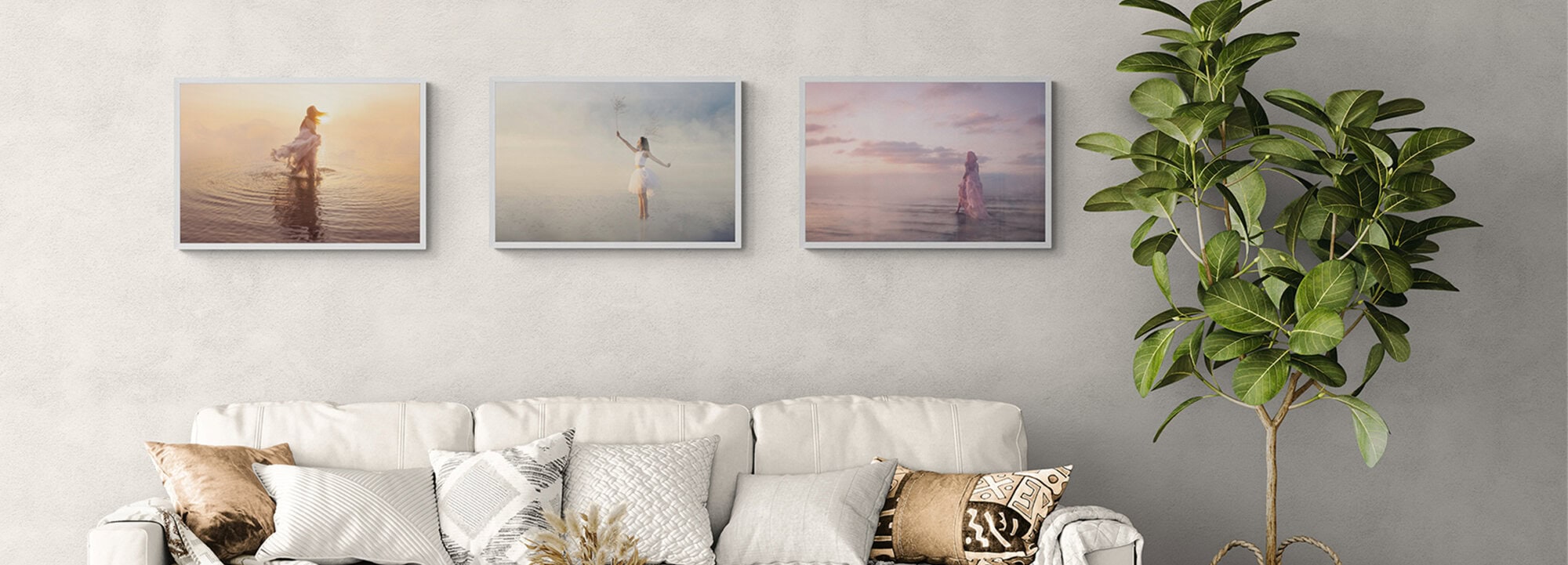
That is why fine art photography often works so well as wall art. It does not need to explain everything. It can simply hold space in a room and keep revealing itself over time.
5. Standard photography is often client-led. Fine art photography is artist-led.
In standard photography, the brief often comes from the client.
For example:
“We need updated team photos.”
“We want family photos in the park.”
“We need product images for the website.”
“We want photographs of our event.”
With fine art photography, the artist has a stronger creative voice. There may still be a subject, model or client involved, but the final image is shaped by the artist’s vision.
As a fine art photographer, I am thinking about what I want the image to express. I am thinking about symbolism, emotion, colour, movement and the final artwork as a whole.
That does not mean the subject gets lost. Quite the opposite. The aim is to reveal something deeper.
6. Visual examples
Example one: A portrait by the sea
Standard photography:
A person smiling at the camera on the beach.
The sea is in the background.
The image is clear, natural and recognisable.
Fine art photography:
A person stands by the water at sunrise.
Fabric moves in the wind.
The light is soft and golden.
The image feels calm, powerful or dreamlike.
The photograph suggests emotion, change or renewal.
Example Two: A portrait of a woman
Standard photography:
The image shows what she looks like.
The pose is flattering.
The lighting is clean.
Fine art photography:
The image explores who she is becoming.
Her expression, posture, clothing and surroundings all add meaning.
The photograph may feel symbolic, quiet, bold or otherworldly.
It invites the viewer to feel something.
7. Is fine art photography better than standard photography?
No.
They simply do different jobs.
Standard photography is brilliant when you need clarity, consistency and a faithful record of a moment.
Fine art photography is for when you want mood, meaning and personal expression.
Sometimes you need a photograph that says, “Here we are.”
Sometimes you need a photograph that says, “This is who I am.”
Both matter.
But they are not the same thing.
-
Why I choose fine art photography
I became a fine art photographer because I wanted to make images that felt honest, soulful and alive. After years of photographing families and babies, I felt called to create work that came from a deeper place. My move to Whitstable, my connection to the sea, and my own experiences of grief, illness and renewal all became part of that shift.
Fine art photography gives me room to explore what it means to be present. To stop performing. To live with more intention. To create images that remind people they are already enough.
And yes, that is a lot to ask from a camera. But honestly, cameras are clever little things.
The difference between fine art photography and standard photography comes down to intention. Standard photography captures the moment as it appears. Fine art photography transforms that moment into something more expressive, emotional and lasting. As a fine art photographer, I am less interested in perfection and more interested in presence, atmosphere and truth. I want my images to feel like a pause. A breath. A reminder to come back to yourself.
Explore my fine art photography collection, created by British fine art photographer Louisa Peacock and inspired by the sea, sky and the quiet power of living as your true self.
Louisa Peacock creates timeless, elegant photography with a fine art photograph feel, capturing people, stories and meaningful moments with care and intention. Her work blends beautiful natural light, thoughtful composition and a calm, personal approach, helping clients feel relaxed while creating images that feel refined, emotive and lasting.

