
What if we were never separate from nature?
Raising Hare, the art of noticing, and remembering our place in the natural world
I’ve just finished reading Raising Hare by Chloe Dalton, and it’s one of those books that seems to linger long after you’ve put it down.
I found myself folding over corners and photographing pages because so much of what Dalton was writing seemed to connect with thoughts that have been circling around my own fine-art photography for some time.
On the surface, Raising Hare is the story of an extraordinary relationship between Dalton and a wild hare she finds as a tiny leveret. But underneath it is a much bigger question: what happens when we stop thinking of ourselves as separate from the natural world?
It’s a question that feels increasingly central to the photographs I want to make — and to the feeling I hope those photographs bring into the spaces where they eventually live.
Learning to see what was already there
One of the things I loved most about Raising Hare was the way the hare gradually changes Dalton’s relationship with the landscape around her.
The countryside itself hasn’t suddenly changed. The wildlife hasn’t suddenly arrived. Instead, she begins to notice it.
That distinction really stayed with me.
Photography has done something similar for me. It has taught me to notice the things that are easily missed: light catching the edge of long grass, a plant moving across a body, the particular blue-grey of the sea before rain, the way fabric can momentarily take on the shape of water or cloud.
These small observations often become the starting point for my photographs.
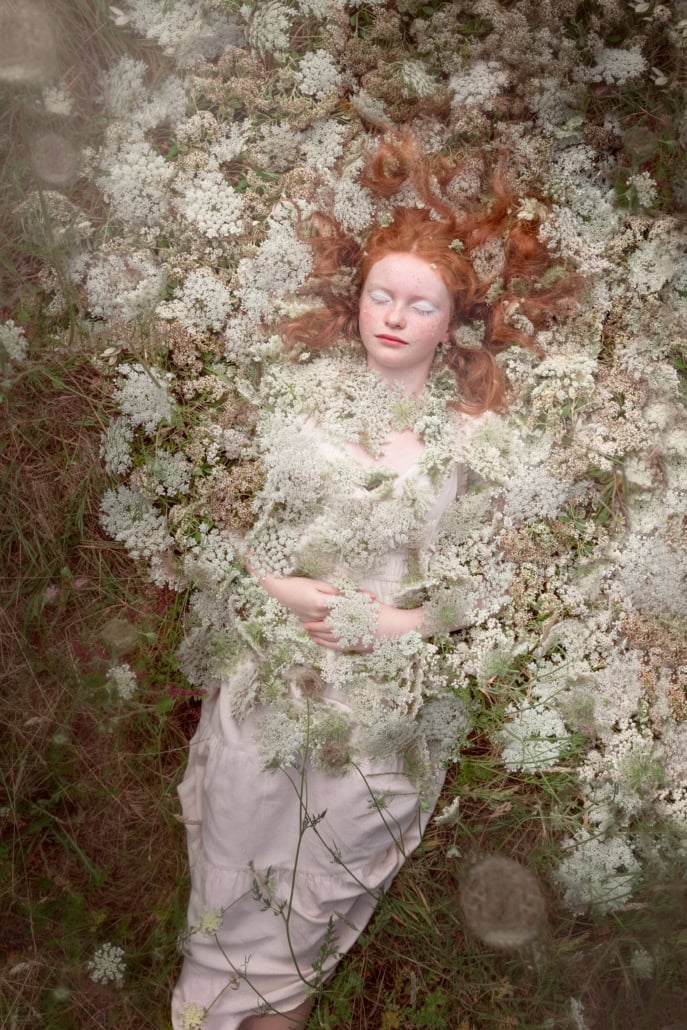
Although my finished works are carefully considered, such as Belonging, above, I don’t want them to feel completely controlled. I want there to be space for wind, water, plants and changing light to alter what happens.
Perhaps that is also why I’m drawn to making images that reward a second look.
From a distance you might first see a figure, a sweep of fabric or a beautiful landscape. Stay with the image a little longer and other details begin to emerge.
For me, that slow act of looking is part of the work.
We are nature too
There is an idea running through Raising Hare that particularly resonated with me: how easily we talk about nature as though it exists somewhere separate from us.
We go into nature. We escape to nature. We talk about protecting it.
But we are nature too.
That thought has started to change the way I compose my photographs.
I am increasingly interested in making the human form feel less like the dominant subject placed against a landscape and more like one element within a much larger living world.
In Belonging, for example, the figure is partially absorbed by a mass of Daucus flowers. Her dress, body, grasses and flowers begin to overlap until it isn’t immediately obvious where one ends and another begins.
That’s important to me.
I don’t want nature to function simply as decoration around the person. I want the relationship between them to be the photograph.
And when these works leave my studio and hang in someone’s home, I hope something of that feeling travels with them: a reminder of wildness, stillness and our own place within something much larger.
From BREATHE to Belonging
This marks a subtle but important change in my work.
My previous body of work, BREATHE, explored the tension between constriction and release, control and surrender. The sea, wind, trees, cloud and fabric became ways of giving physical form to emotional experiences that can be difficult to describe.
Nature was already present throughout those photographs, but often as a reflection of an internal state.
More recently, my attention has moved outwards.
I’m becoming increasingly interested in the interplay between the human form and the landscape itself.
Can the body appear to be gathered into flowers, grasses, water or trees? Can a photograph make us question which is the subject: the person or the landscape? Can the boundaries between the two become uncertain?
Belonging feels like one of the first photographs where this new direction became clear to me.
There is still the dreamlike, painterly quality that runs through my work, and I’m still fascinated by movement, fabric, colour and atmosphere. But the question underneath the image has changed.
BREATHE asked what it might mean to come home to ourselves.
This new work asks whether belonging might also mean remembering that we are part of the landscape around us.
When nature becomes a collaborator
One of the things I found so beautiful about Dalton’s relationship with the hare is that she never truly possesses it.
The hare remains wild.
There is something in that idea that relates strongly to the way I want to work outdoors.
I can plan a photograph meticulously. I revisit locations, watch tides and weather, consider the colour and movement of fabrics and think carefully about where and when the light will fall.
And then nature inevitably has other ideas.
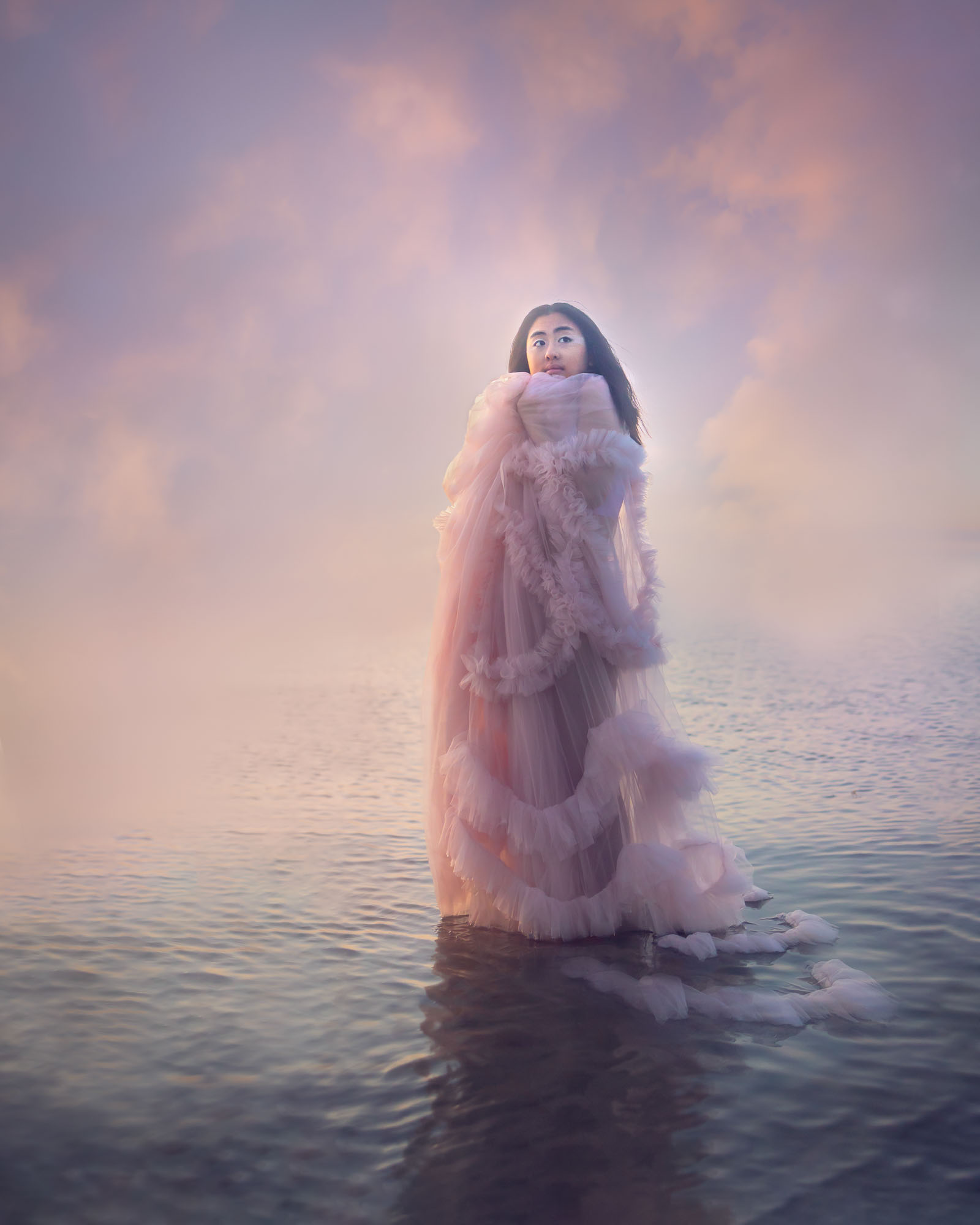
The wind changes. Cloud arrives. Flowers move across a face. Fabric catches a gust and takes on a shape I could never have designed.
I’ve become increasingly interested in those moments.
Rather than treating the landscape as a setting I need to control, I want to allow it some authorship of the finished photograph.
That unpredictability is one of the reasons each work feels so particular to me. A photograph records not only the person who stood there, but a combination of tide, season, weather, movement and light that existed for a few seconds and then disappeared.
A fine-art print allows that fleeting moment to become something permanent.
Perhaps that’s part of what I love most about photography.
A photograph as a place to return to
I’ve talked a lot over the past year about the art of noticing. Until now, I’ve perhaps thought about noticing primarily as something we do while walking through the world.
I’m beginning to think about my photographs in the same way.
The images I personally want to live with aren’t necessarily the ones that reveal everything immediately. They’re the ones I can return to and find something different in depending on the day: a detail, a colour, a gesture, a feeling I hadn’t noticed before.
That is increasingly what I want my own fine-art prints to offer.
Not simply an image of a beautiful landscape, but a small interruption to everyday life. Something that brings a little of the outside world inside and asks us, however briefly, to look again.
Perhaps that’s ultimately why Raising Hare affected me so deeply.
Dalton’s story is about a hare, but it is also about what can happen when we pay close attention to another living thing. Her landscape becomes richer not because it changes, but because she changes the way she sees it.
And perhaps interconnectedness isn’t something we need to create at all.
Perhaps it is something we need to remember.
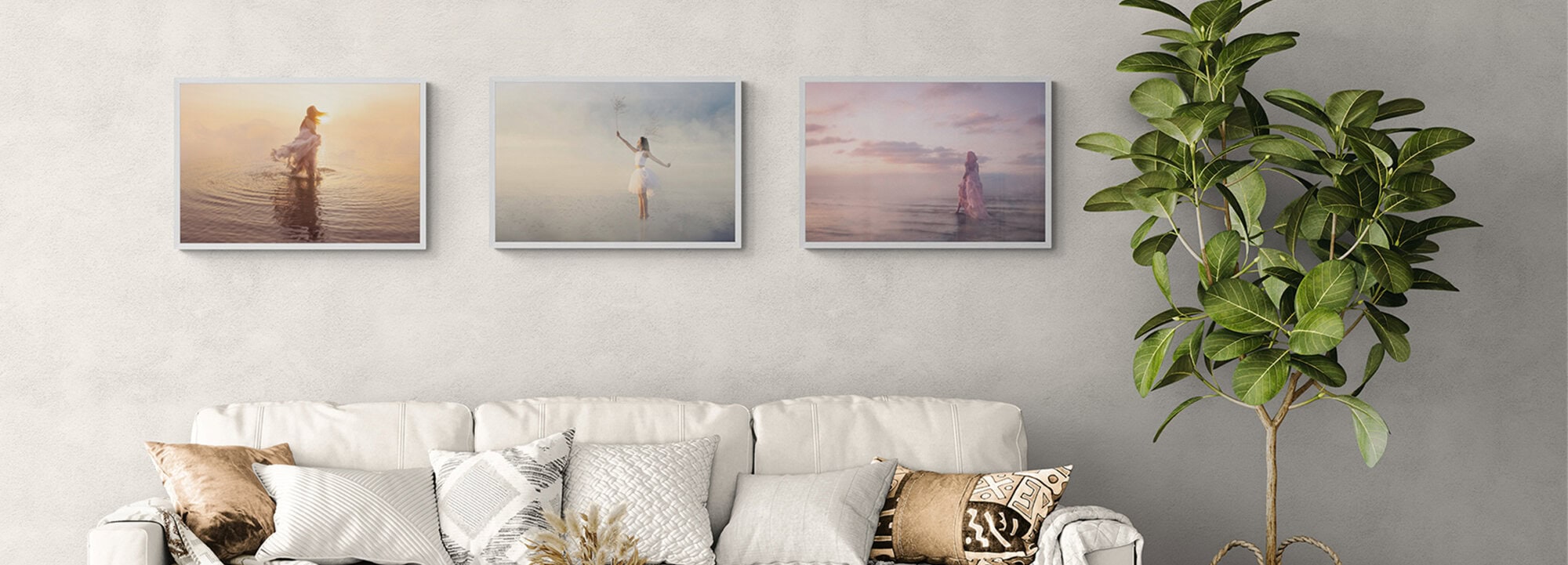
My fine-art photographs are available as archival, limited-edition prints. You can explore the current collection and discover the stories behind individual works through my online gallery.
Louisa Peacock creates timeless, elegant photography with a fine art photograph feel, capturing people, stories and meaningful moments with care and intention. Her work blends beautiful natural light, thoughtful composition and a calm, personal approach, helping clients feel relaxed while creating images that feel refined, emotive and lasting.
